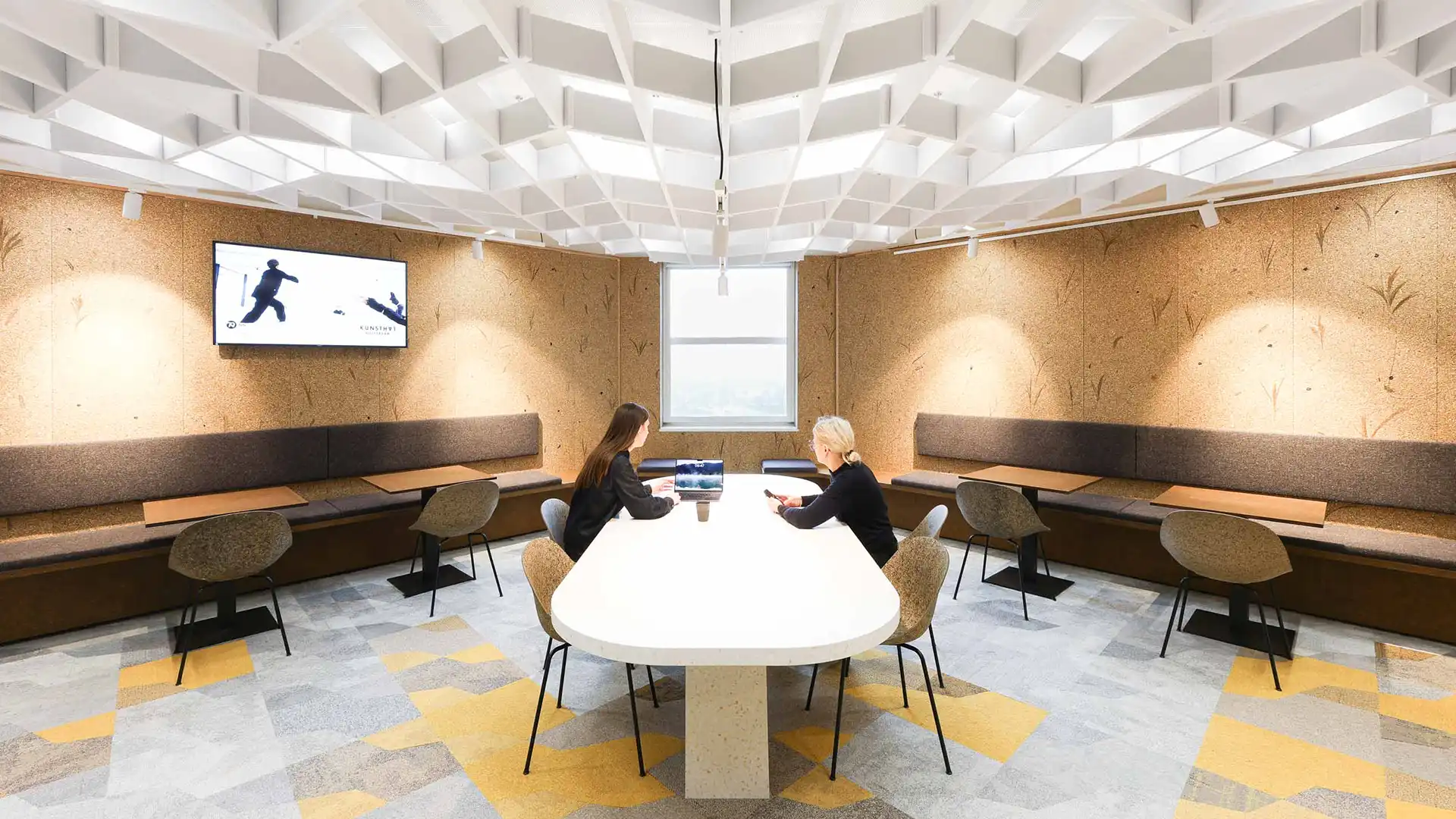
100% circular and zero waste work environment
The task
For Nationale Nederlanden and OHRA, both part of the NN Group, ZENBER Architects has designed an integrated circular interior concept that is fully tailored to the NN Group's sustainability ambitions.
The design is based on the principles of reduce, reuse, remanufacture and biobased. Because the “Landmark Arnhem” shell building was empty and therefore did not allow immediate harvesting, circularity was achieved by high-quality reuse of materials and furniture from other NN buildings. Where one-to-one reuse was not possible, parts were remanufactured.
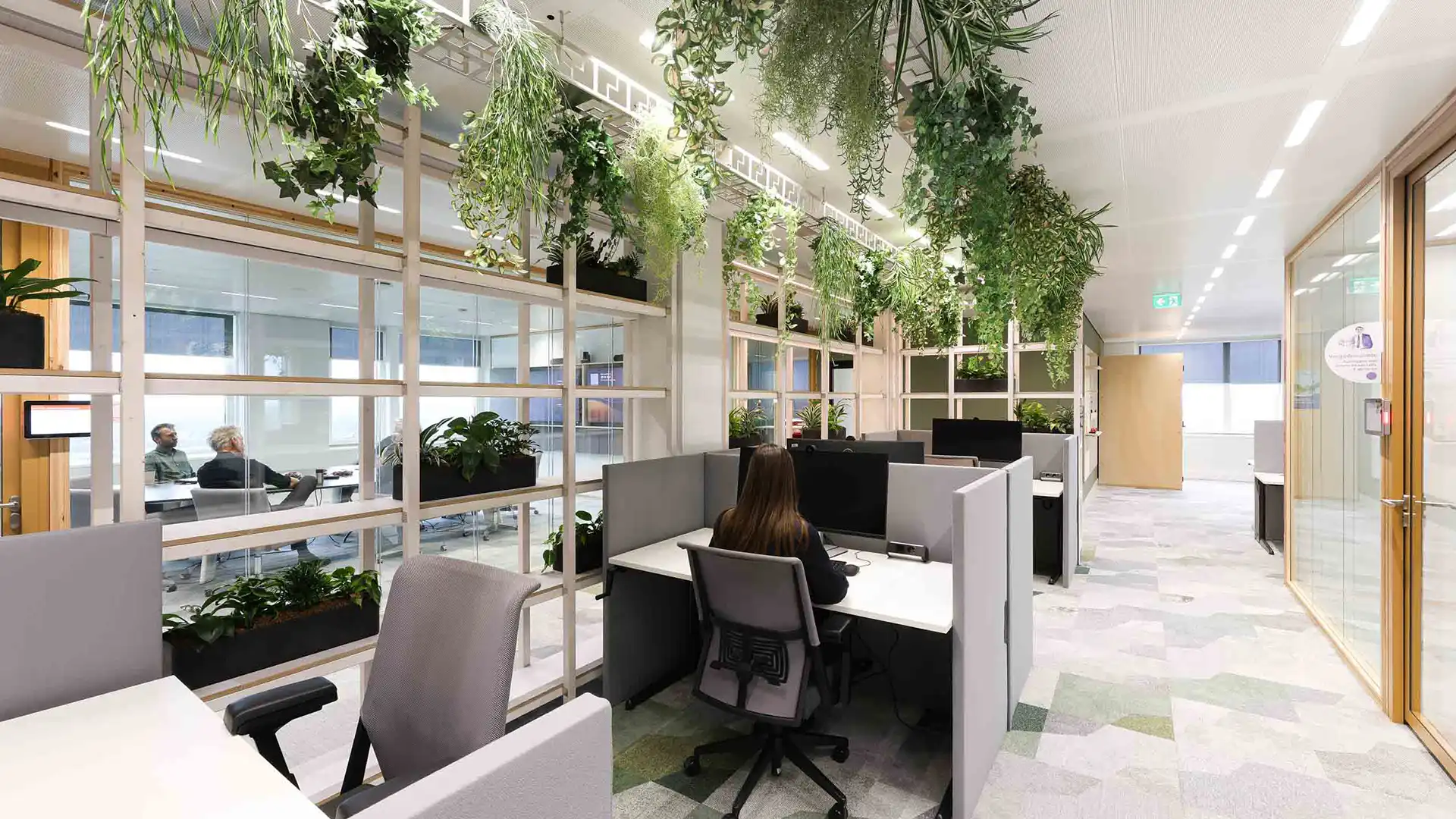
"Green and sustainable work environment"
About this project
With the high ambitions in the field of sustainability and the Well platinum certification includes specific criteria in the areas of: air, water, food, light, movement, thermal comfort, acoustics and materials that have been taken into account. The design is based on the 10-R model and the environmental impact has been made transparent by means of an MKI calculation. In doing so, sustainability has not only been made technical, but also visible and experienced.
Concrete applications
• Loose furniture: approximately 95% reuse from other NN locations. Only 5% new, made in biobased seats (seaweed).
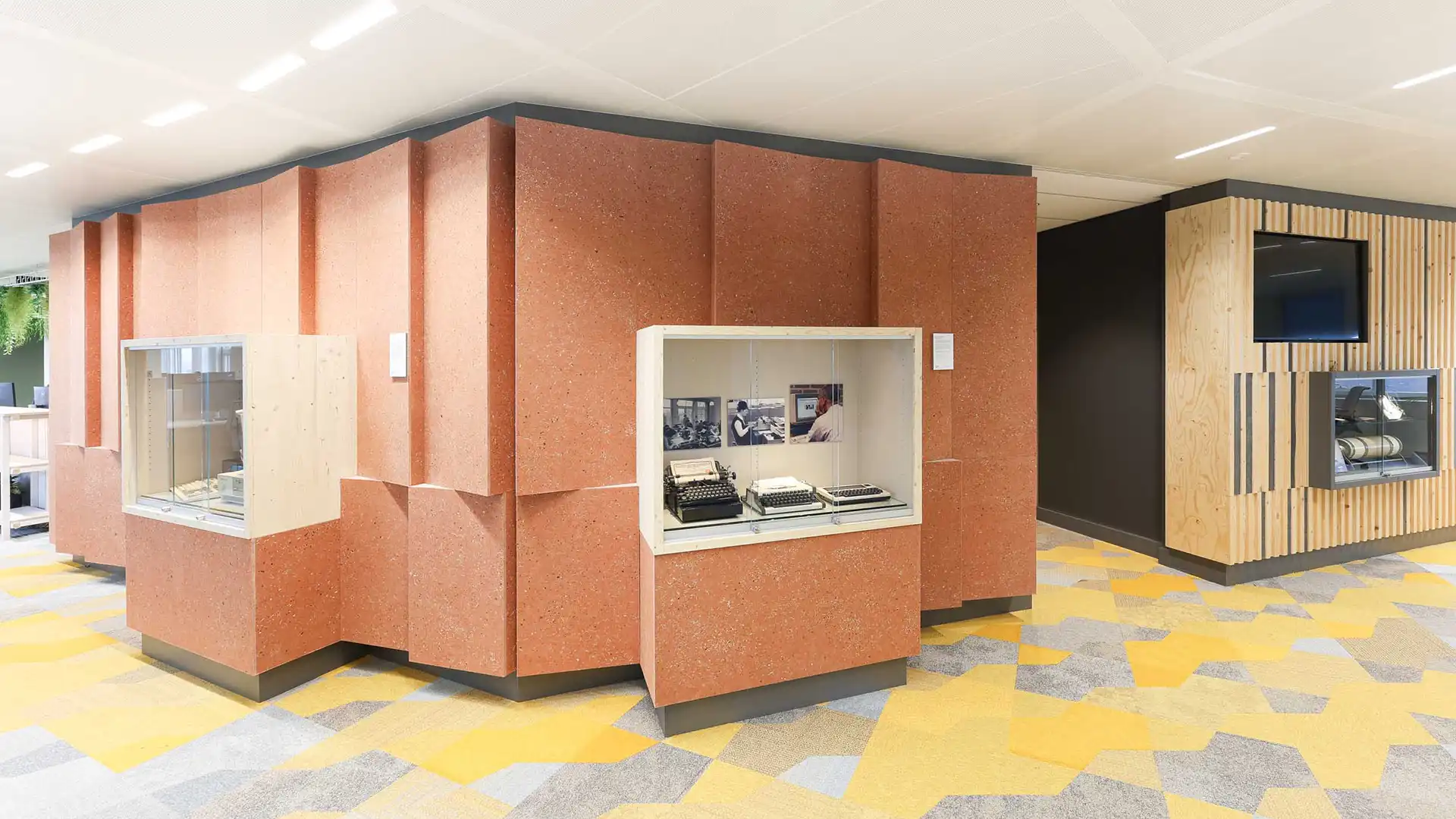
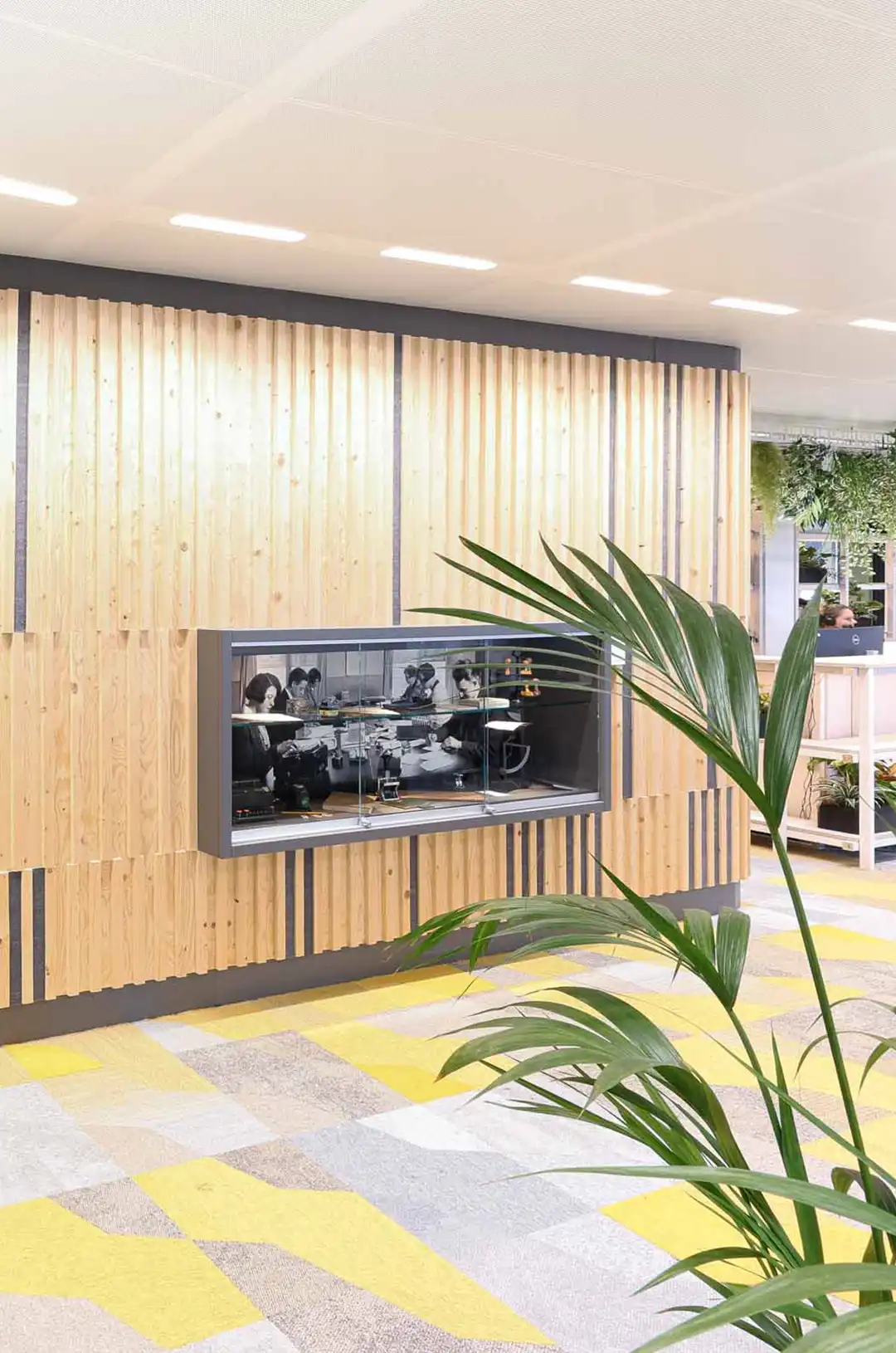
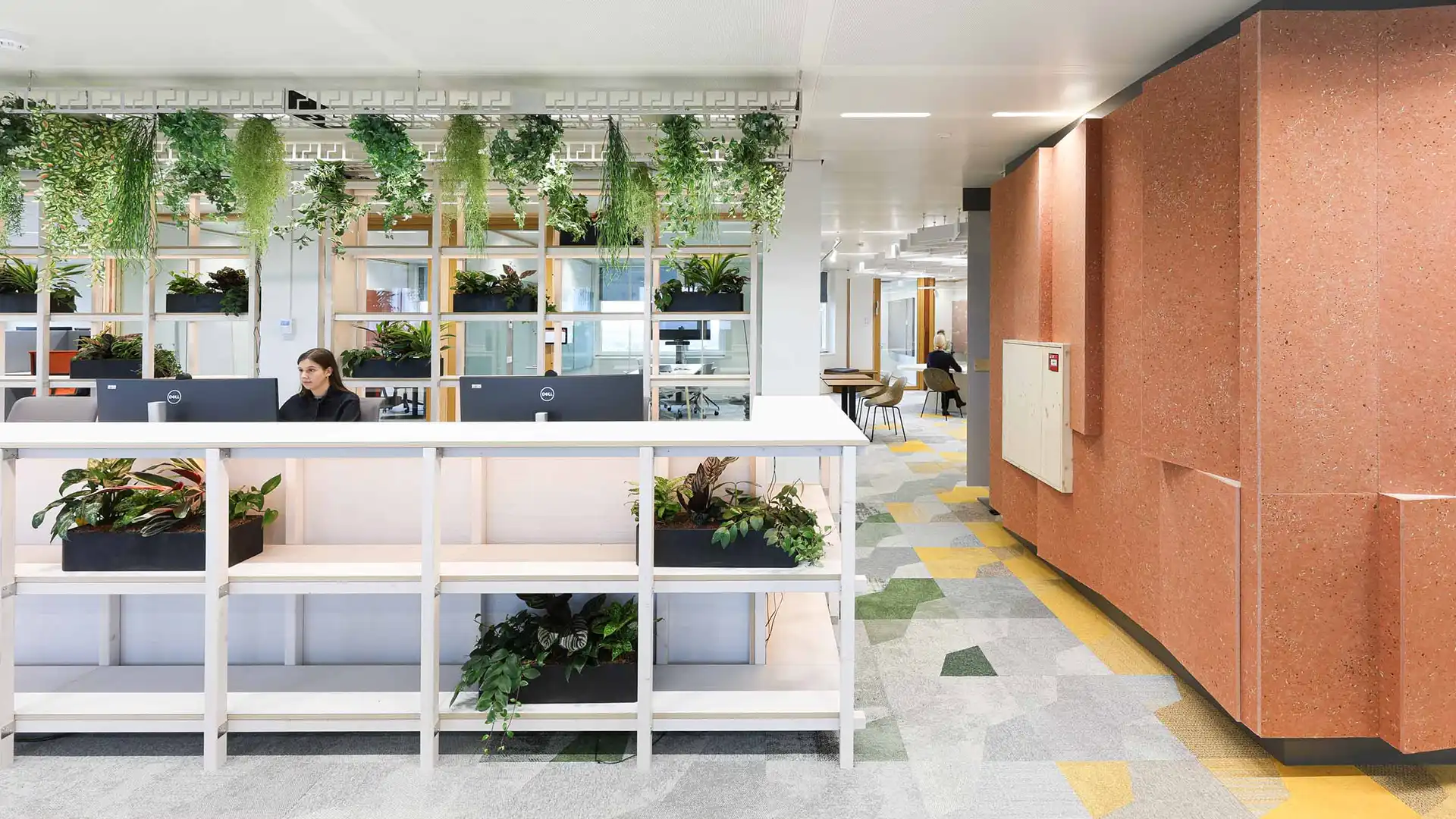
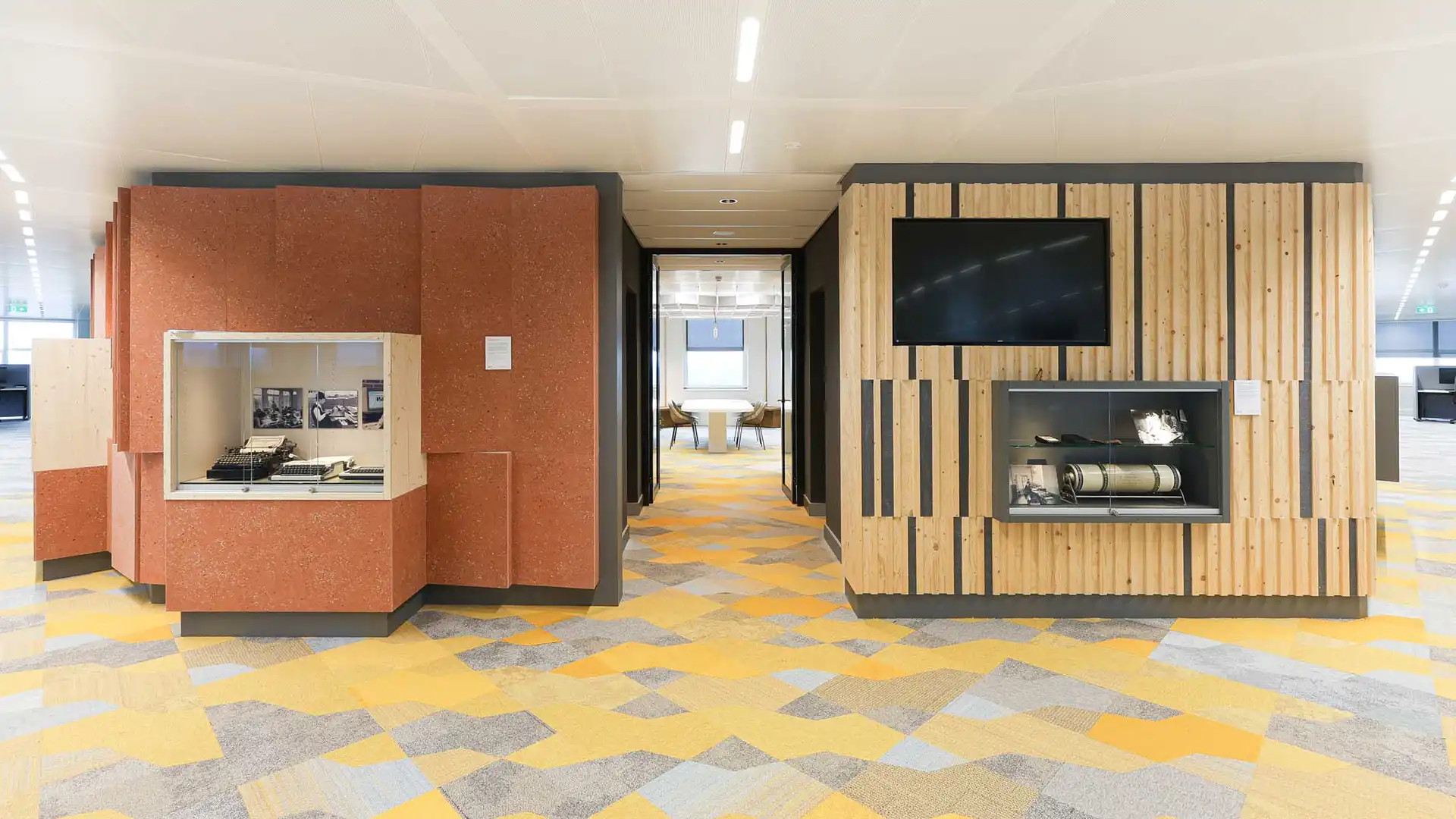
• Permanent design: largely composed of harvested parts, such as pantries (one-on-one reuse) and acoustic partitions that have been repurposed as wall coverings around the cores.
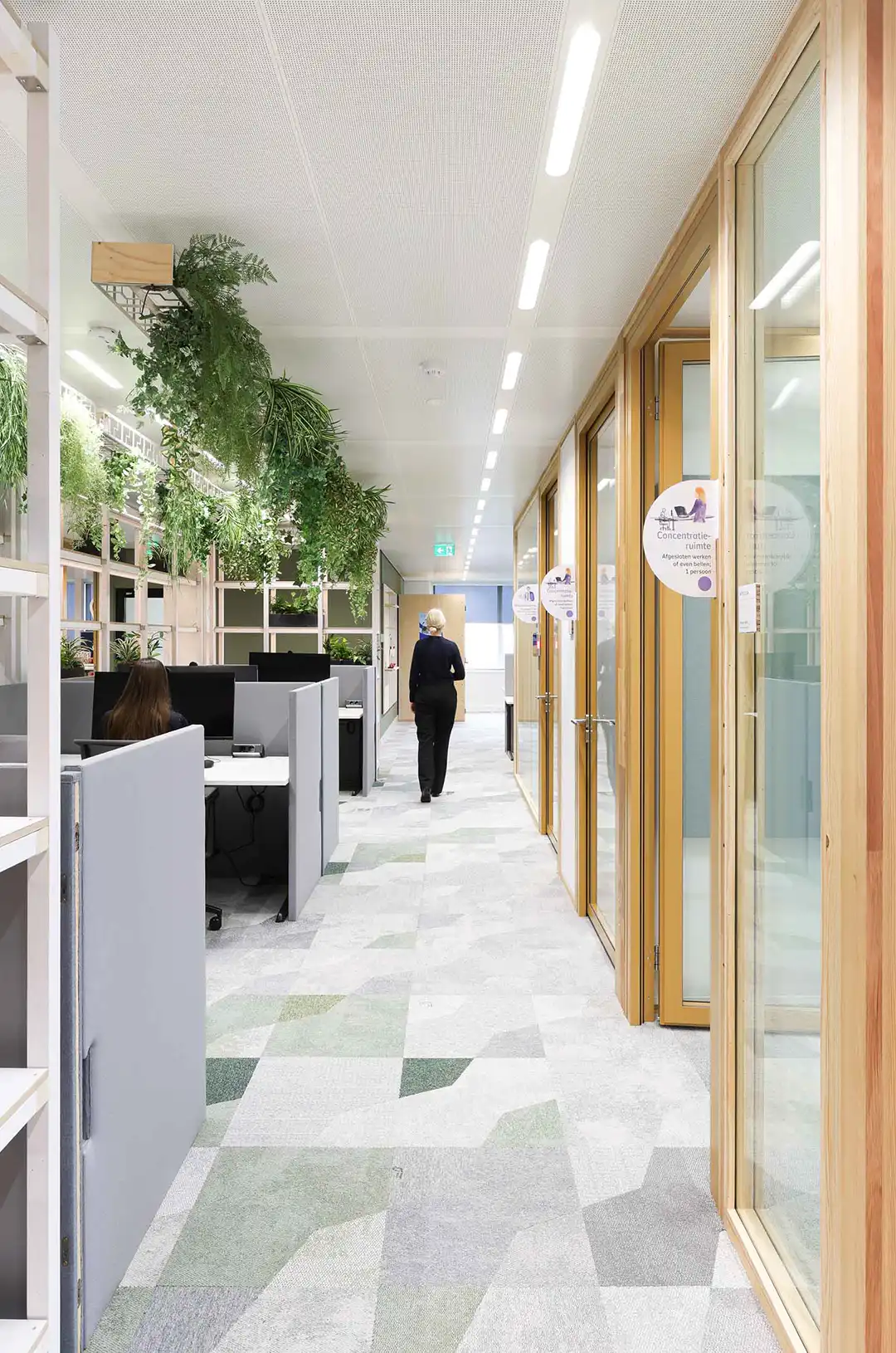
• System walls: hybrid use of recycled materials with new doors to meet NN's high acoustic requirements.
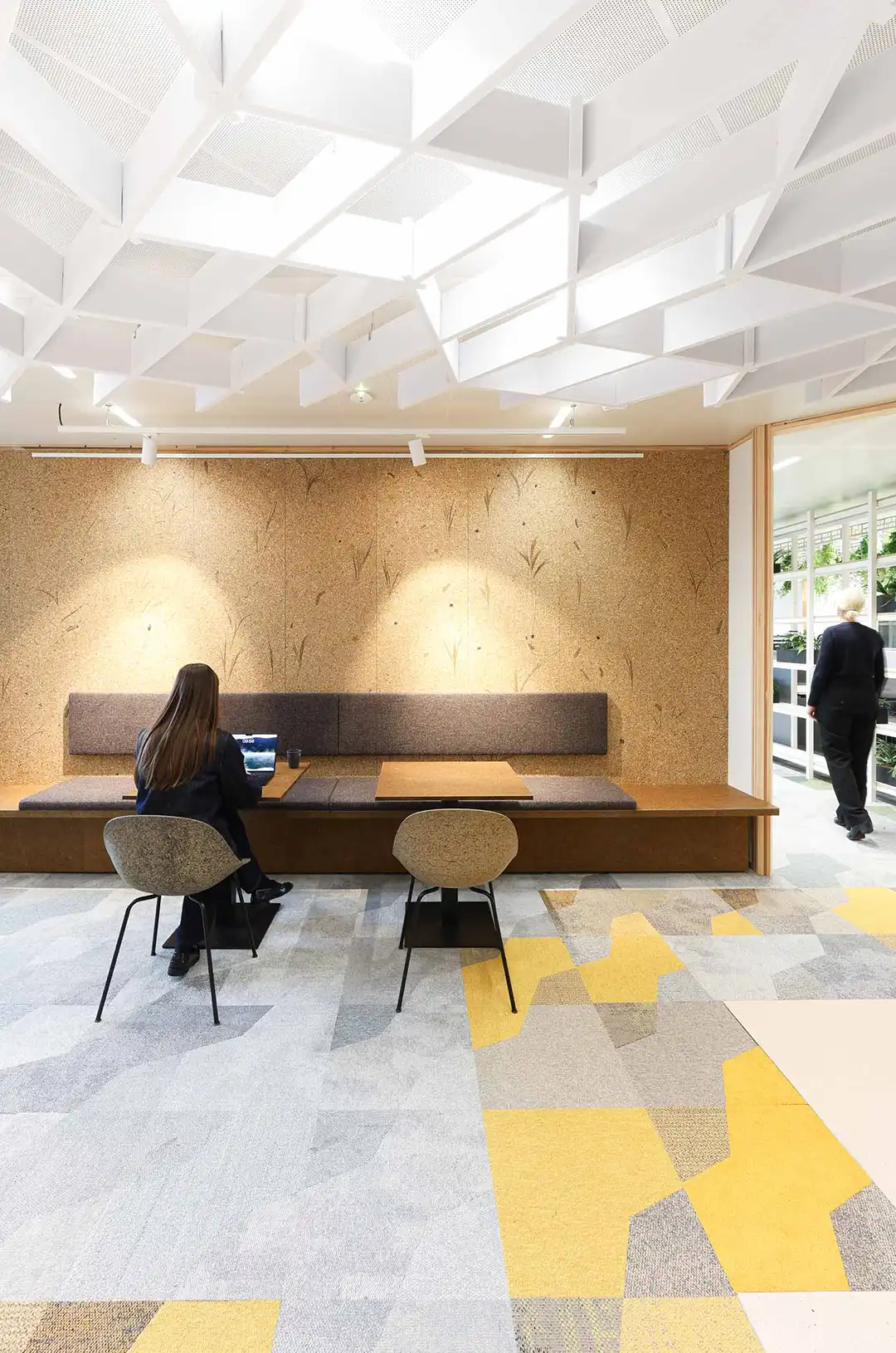
• Ceilings: completely reused
• Carpet: made from overproduced and incorrectly produced carpet tiles, re-cut into a new, contemporary pattern.
• Biobased materials: including a compostable composite board used in the lounge, which can return to the biological cycle after use.
The result is a 'not zero' renovation and circular interior design that is measurable, Paris Proof, is 100% circular and future-proof.
Socially responsible design
In addition to circularity, ZENBER has strongly focused on translating identity, culture, and socially responsible design into a recognisable interior. NN wants to empower employees to get the best out of themselves. The work environment plays an important role here. That is why, in addition to sustainable, NN also facilitates inclusive working environments. Through the DEI (Diversity, Equity & Inclusion), workplaces and spaces are suitable for the various users and associated working styles.
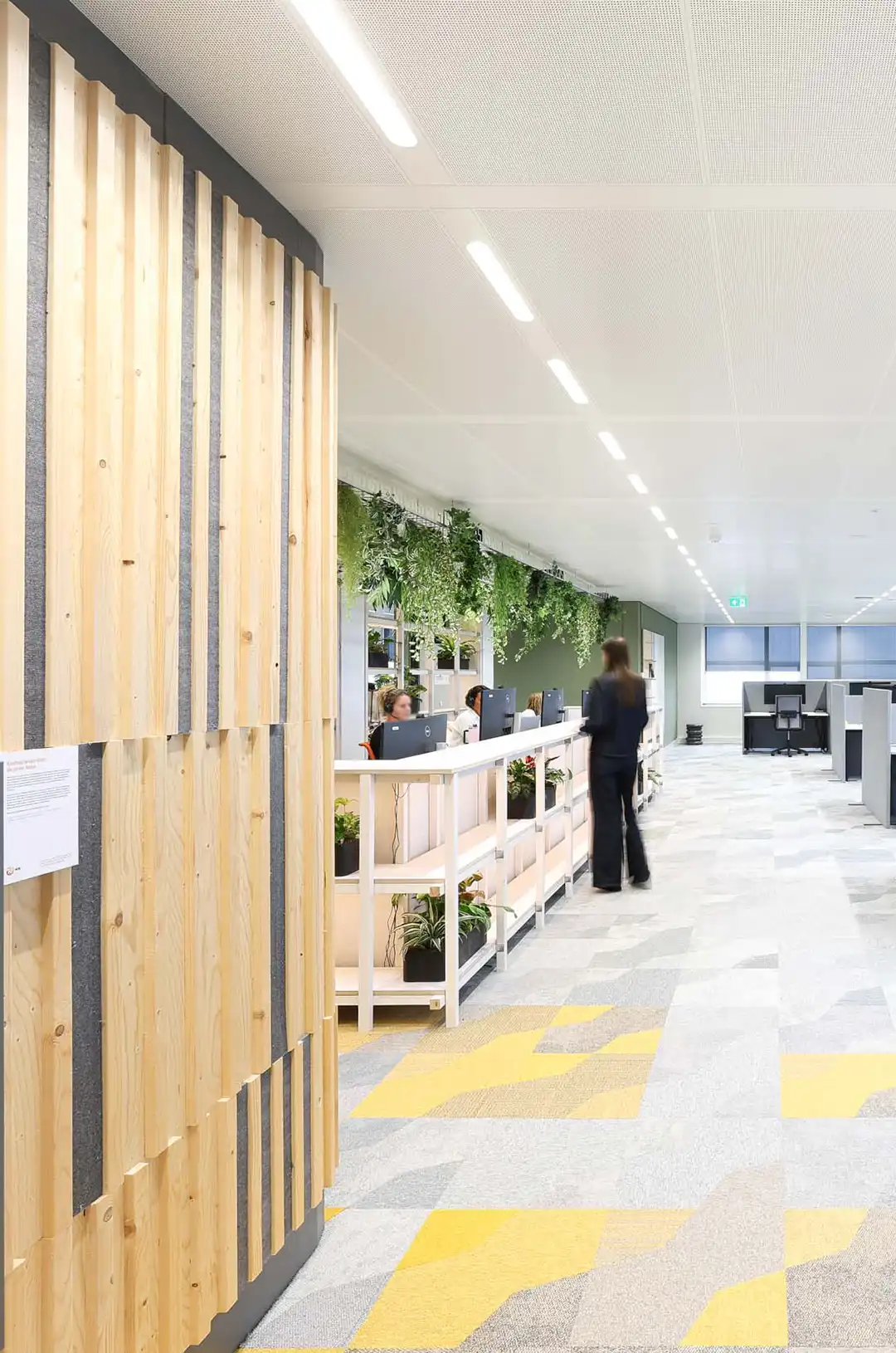
"Lounge areas with sustainable walls, ceilings, carpet tiles and furniture"
Highlights
Integrating DEI (Diversity, Equity & Inclusion):
The interior is designed according to the ITS standard for full accessibility. Workplaces and spaces are flexible, adaptable and suitable for a variety of users and working styles. Workplace personalization contributes to comfort, well-being and inclusiveness.
Mental and sensory experience:
Variation in light, acoustics and spatial settings enables users to consciously choose an environment that suits their task or mental needs, which supports peace, focus and dynamism.
Green experience as an identity carrier:
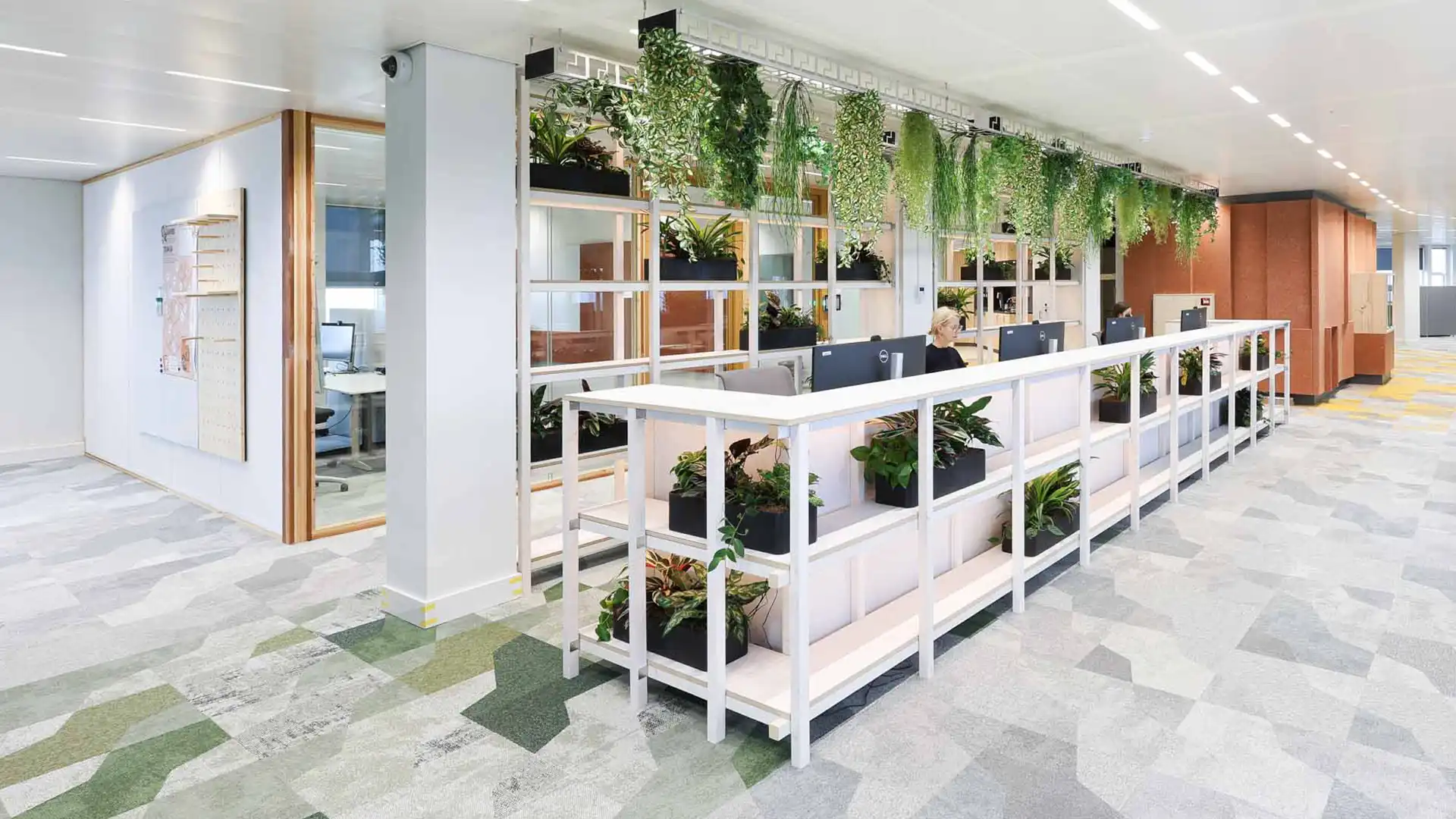
Green is an integral part of the design. Plant stages and green frameworks around workplaces strengthen the connection with nature. These frameworks are made from recycled wooden slats and connect identity, circularity and well-being.
Clear function zoning:
By using recycled materials thoughtfully, functions such as working, meeting and relaxing are clearly recognisable, without sacrificing aesthetics or comfort.

Credits

100% circular and zero waste work environment
The task
For Nationale Nederlanden and OHRA, both part of the NN Group, ZENBER Architects has designed an integrated circular interior concept that is fully tailored to the NN Group's sustainability ambitions.
The design is based on the principles of reduce, reuse, remanufacture and biobased. Because the “Landmark Arnhem” shell building was empty and therefore did not allow immediate harvesting, circularity was achieved by high-quality reuse of materials and furniture from other NN buildings. Where one-to-one reuse was not possible, parts were remanufactured.
About this projct
With the high ambitions in the field of sustainability and the Well platinum certification includes specific criteria in the areas of: air, water, food, light, movement, thermal comfort, acoustics and materials that have been taken into account. The design is based on the 10-R model and the environmental impact has been made transparent by means of an MKI calculation. In doing so, sustainability has not only been made technical, but also visible and experienced.
Concrete applications
• Loose furniture: approximately 95% reuse from other NN locations. Only 5% new, made in biobased seats (seaweed).
• Permanent design: largely composed of harvested parts, such as pantries (one-on-one reuse) and acoustic partitions that have been repurposed as wall coverings around the cores.
• System walls: hybrid use of recycled materials with new doors to meet NN's high acoustic requirements.
• Ceilings: completely reused
• Carpet: made from overproduced and incorrectly produced carpet tiles, re-cut into a new, contemporary pattern.
• Biobased materials: including a compostable composite board used in the lounge, which can return to the biological cycle after use.
The result is a 'not zero' renovation and circular interior design that is measurable, Paris Proof, is 100% circular and future-proof.
Socially responsible design
In addition to circularity, ZENBER has strongly focused on translating identity, culture, and socially responsible design into a recognisable interior. NN wants to empower employees to get the best out of themselves. The work environment plays an important role here. That is why, in addition to sustainable, NN also facilitates inclusive working environments. Through the DEI (Diversity, Equity & Inclusion), workplaces and spaces are suitable for the various users and associated working styles.
"Green and sustainable work environment"
Connect to nature
The green experience is visible and tangible both inside and out. The office offers fantastic views of the green surroundings. You can land under sustainable plant frames made from harvested and sustainable materials
The end result is a sustainable, inclusive and circular work environment that visibly anchors the identity and ambitions of Nationale Nederlanden.
"Lounge areas with sustainable walls, ceilings, carpet tiles and furniture"
Highlights
Integrating DEI (Diversity, Equity & Inclusion):
The interior is designed according to the ITS standard for full accessibility. Workplaces and spaces are flexible, adaptable and suitable for a variety of users and working styles. Workplace personalization contributes to comfort, well-being and inclusiveness.
Mental and sensory experience:
Variation in light, acoustics and spatial settings enables users to consciously choose an environment that suits their task or mental needs, which supports peace, focus and dynamism.
Green experience as an identity carrier:
Green is an integral part of the design. Plant stages and green frameworks around workplaces strengthen the connection with nature. These frameworks are made from recycled wooden slats and connect identity, circularity and well-being.
Clear function zoning:
By using recycled materials thoughtfully, functions such as working, meeting and relaxing are clearly recognisable, without sacrificing aesthetics or comfort.
Credits